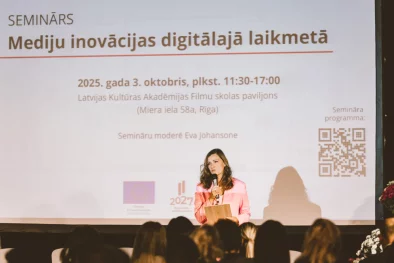
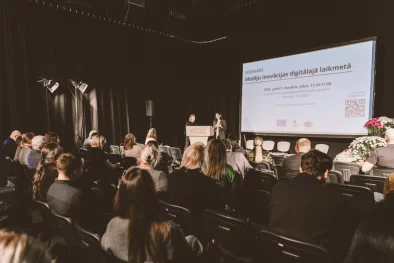
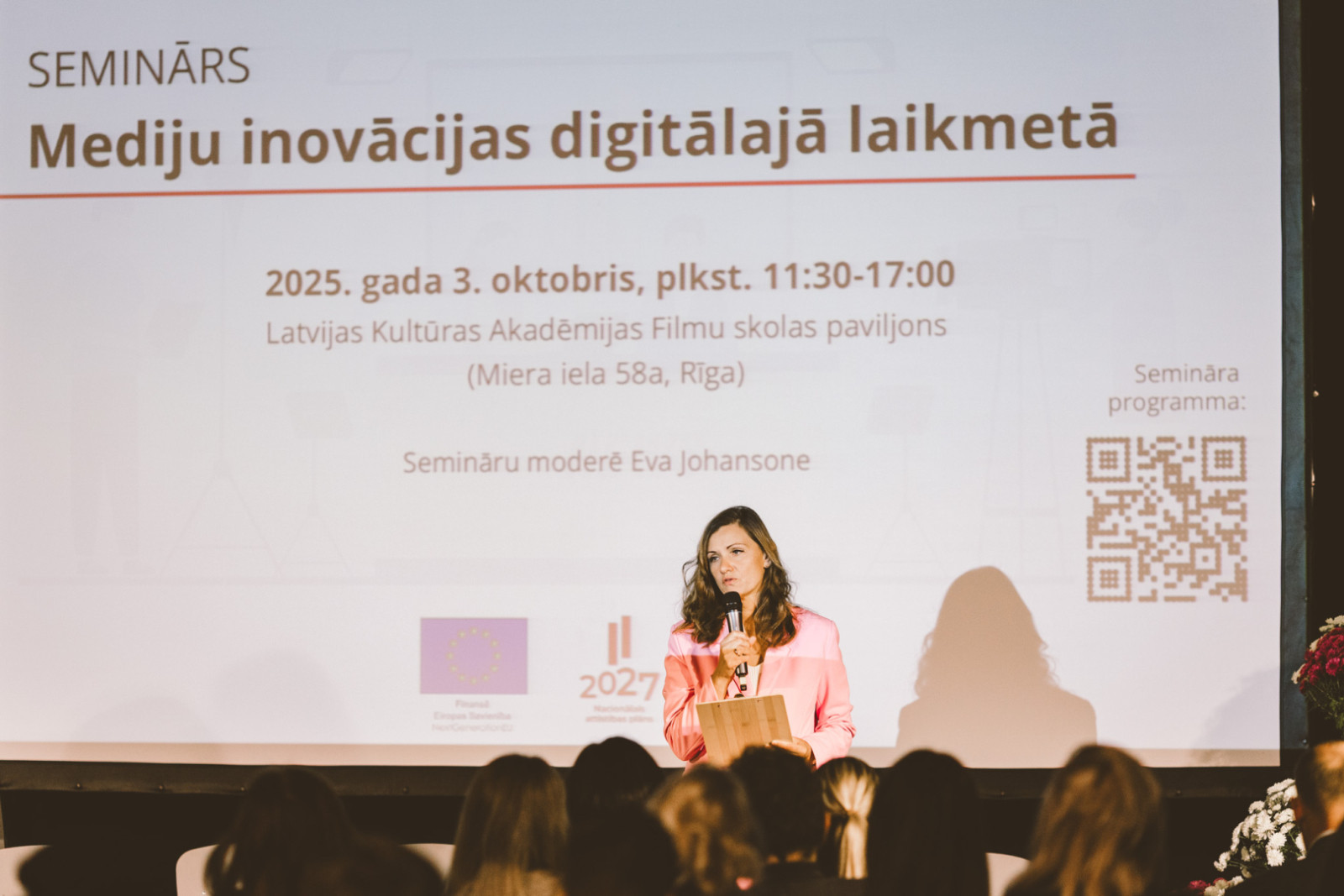
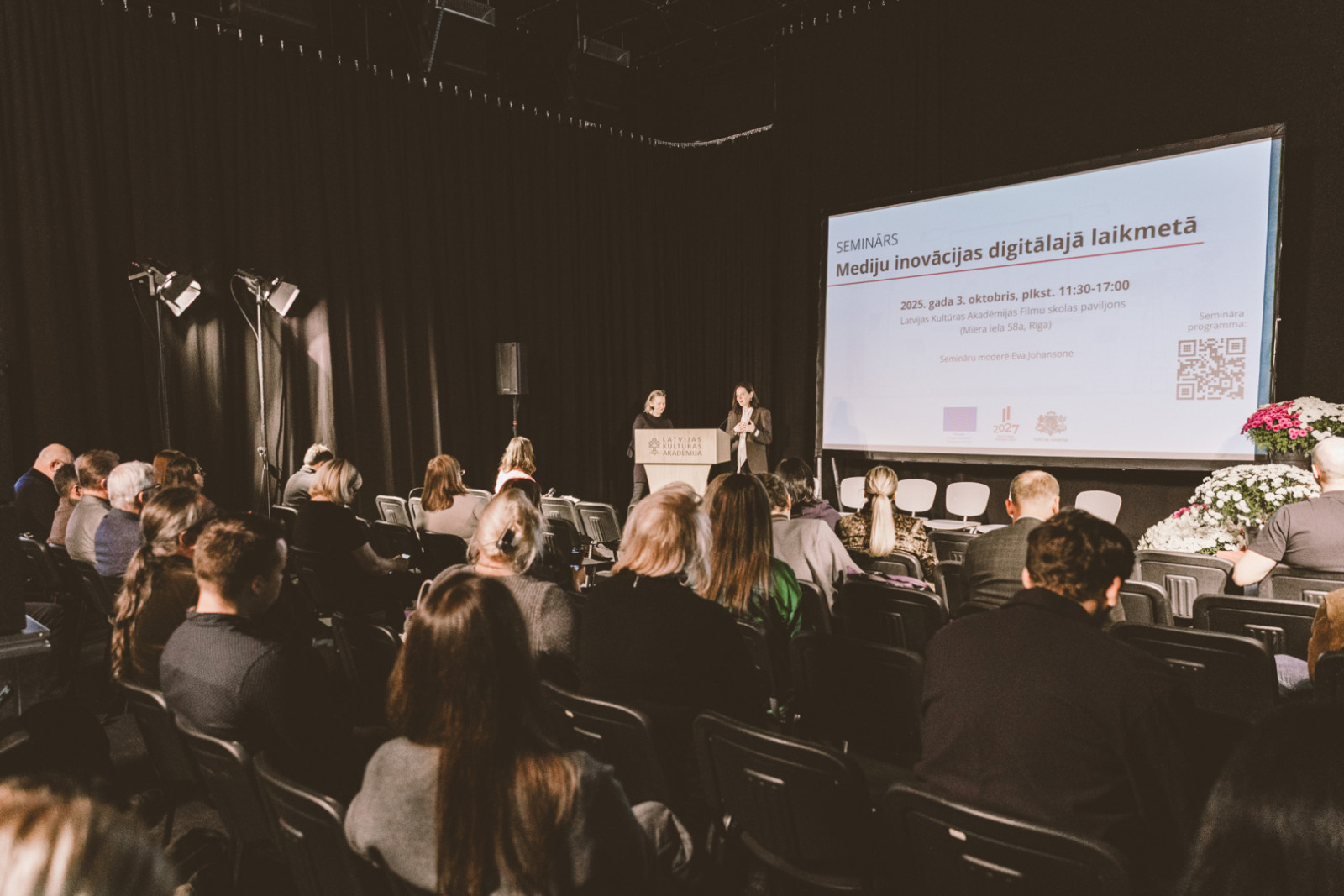
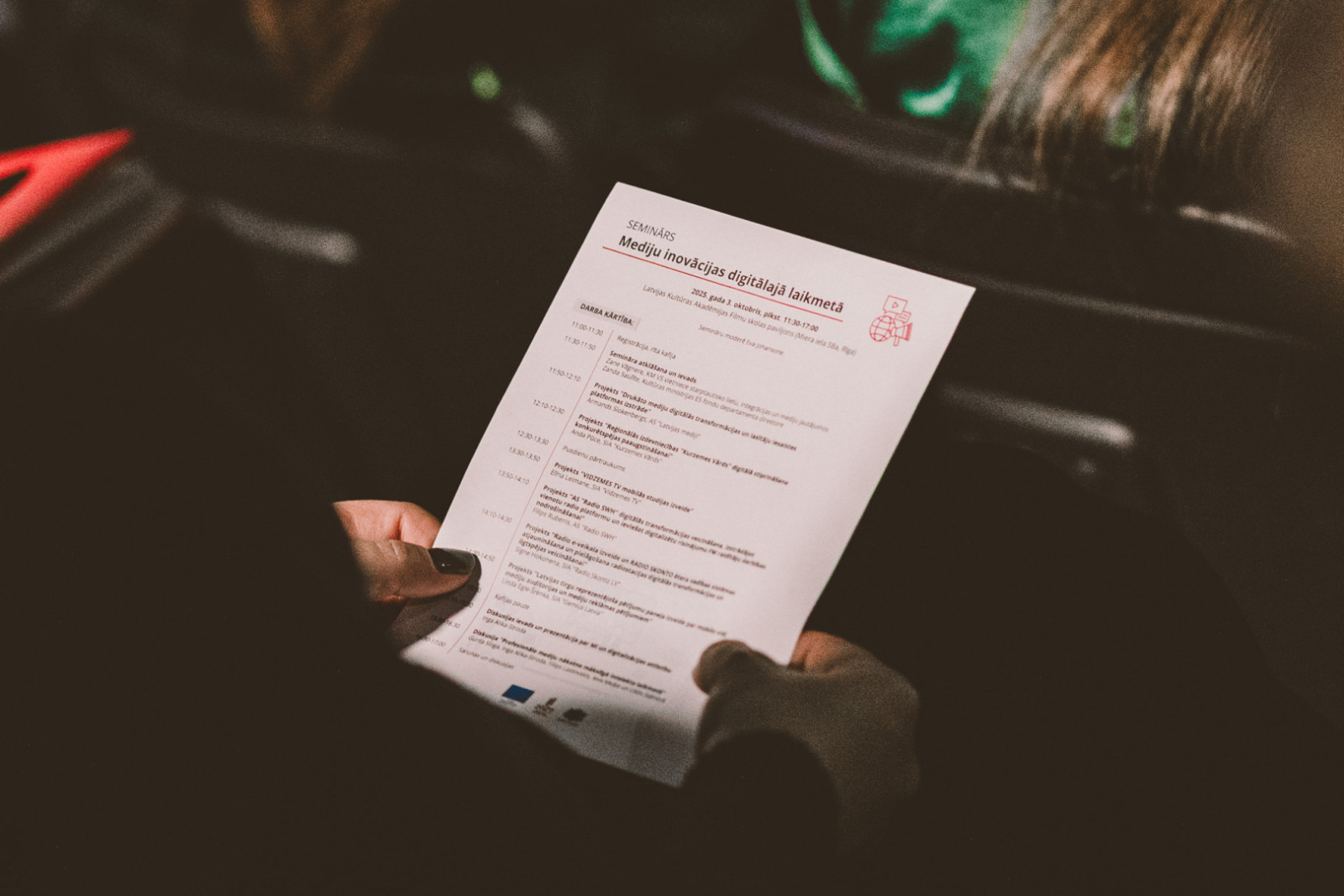
On October 3, representatives of the Latvian media industry participated in a seminar organized by the Ministry of Culture entitled "Media Innovations in the Digital Age" to discuss the future of professional media in the age of artificial intelligence.
During the seminar, media companies shared their experiences in implementing projects supported by the Recovery and Resilience Facility, which promotes the digital transformation of print and regional media, the development of new platforms, and the introduction of innovative solutions. As confirmed by the participants, digitization projects provide opportunities for the development of new and modern solutions in the media sector, ranging from the introduction of paid content and the development of shared technological platforms to the creation of local and regional content, which helps to expand the audience and strengthen the sustainability of the sector. They also strengthen the competitiveness and efficiency of the company, enabling the media to offer higher quality content to a wider audience.
In the discussion "The Future of Professional Media in the Age of Artificial Intelligence," industry representatives emphasized that the age of artificial intelligence creates both opportunities and significant challenges, especially in the areas of security and disinformation. The discussions focused on issues of editorial independence, data protection, and ethics—how to ensure authorship, how to label content created by artificial intelligence, and how to maintain trust in professional journalism.
One of the most important solutions highlighted was cooperation between media outlets and maintaining dialogue with state institutions. Industry representatives pointed out that it is important for them that the work of the media is noticed, appreciated and supported, as this promotes trust and strengthens common understanding of the challenges facing the industry. Strong media create a resilient society, while public support helps to strengthen professional media.
It was noted that innovation and digital solutions have already become part of everyday life, requiring responsible and coordinated action across the industry. At the same time, participants emphasized that strengthening media literacy in society is closely linked to the sustainability of the industry; by developing the audience's ability to critically evaluate information and trust professional media, the resilience and sustainability of the media is also strengthened.
Participants acknowledged that informative seminars, training courses, and the Media Support Fund provide significant support for the professional development and sustainability of the media sector. The work of the Ministry of Culture in developing a security plan for journalists and other media professionals was also welcomed.
The Ministry of Culture will continue its dialogue with the media sector, monitoring the implementation of digitization projects and their contribution to the development of the sector. As the project nears completion, it is planned to meet again with the project implementers and industry representatives to share experiences on the project results and future development directions for the media industry.
Presentations (in Latvian):
European Union Recovery and Resilience Facility Plan 2.2. Reform and Investment Direction "Digital Transformation and Innovation of Enterprises" 2.2.1.5. i. investments "Promoting the digital transformation of media companies" program "Modernization of media company processes."
About the Recovery and Resilience Facility:
The EU Recovery and Resilience Facility is a budget program managed centrally by the European Commission, established in addition to the EU's multiannual budget for the 2021–2027 programming period. The program aims to support reforms and investments related to the transition to a green and digital economy, as well as to mitigate the social and economic impact of the crisis. By the end of 2026, it is planned to invest EUR 1.97 billion from the Recovery and Resilience Facility in the Latvian economy by implementing reforms and making investments in all six areas of the Recovery and Resilience Facility: Climate and Energy (including REPowerEU), Digital Transformation, Reducing Inequality, Economic Transformation, Health, and Rule of Law.
The Recovery and Resilience Facility reforms and investments in Latvia are financed from the European Commission Recovery and Resilience Facility budget, with co-financing from the state budget.
Additional information for the media:
Lita Kokale,
Head of the Public Relations Division, Ministry of Culture
(+ 371) 26469946
Lita.Kokale@km.gov.lv
(Translated with the help of DeepL Translate)