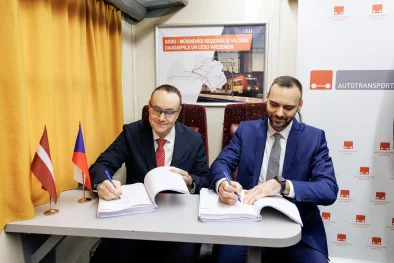
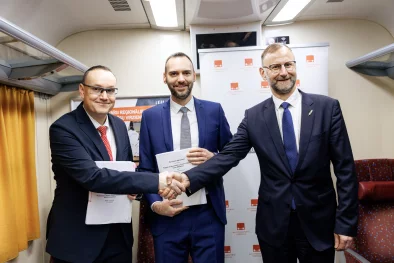
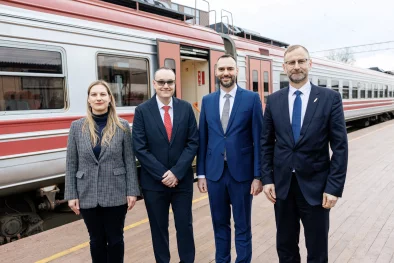
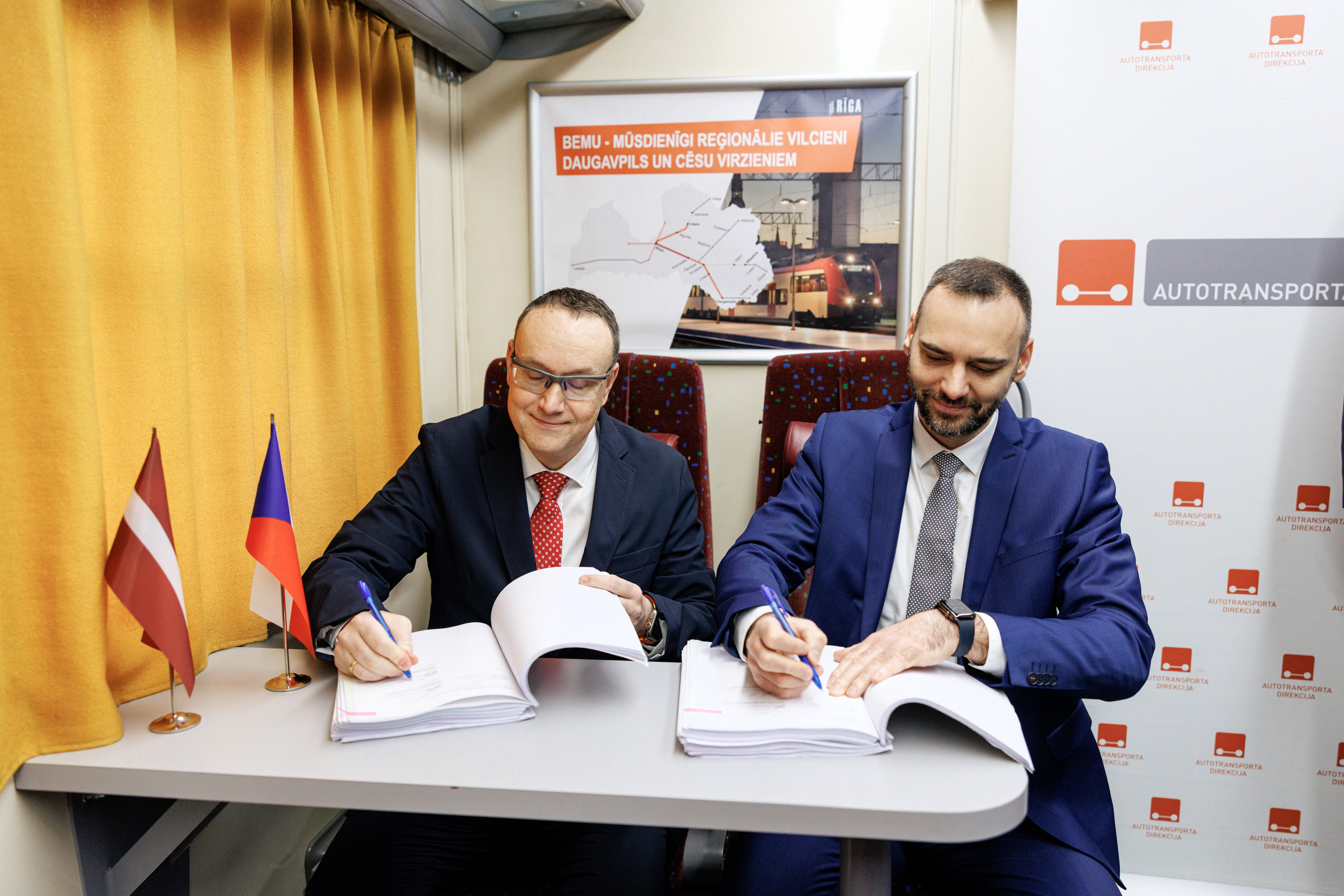
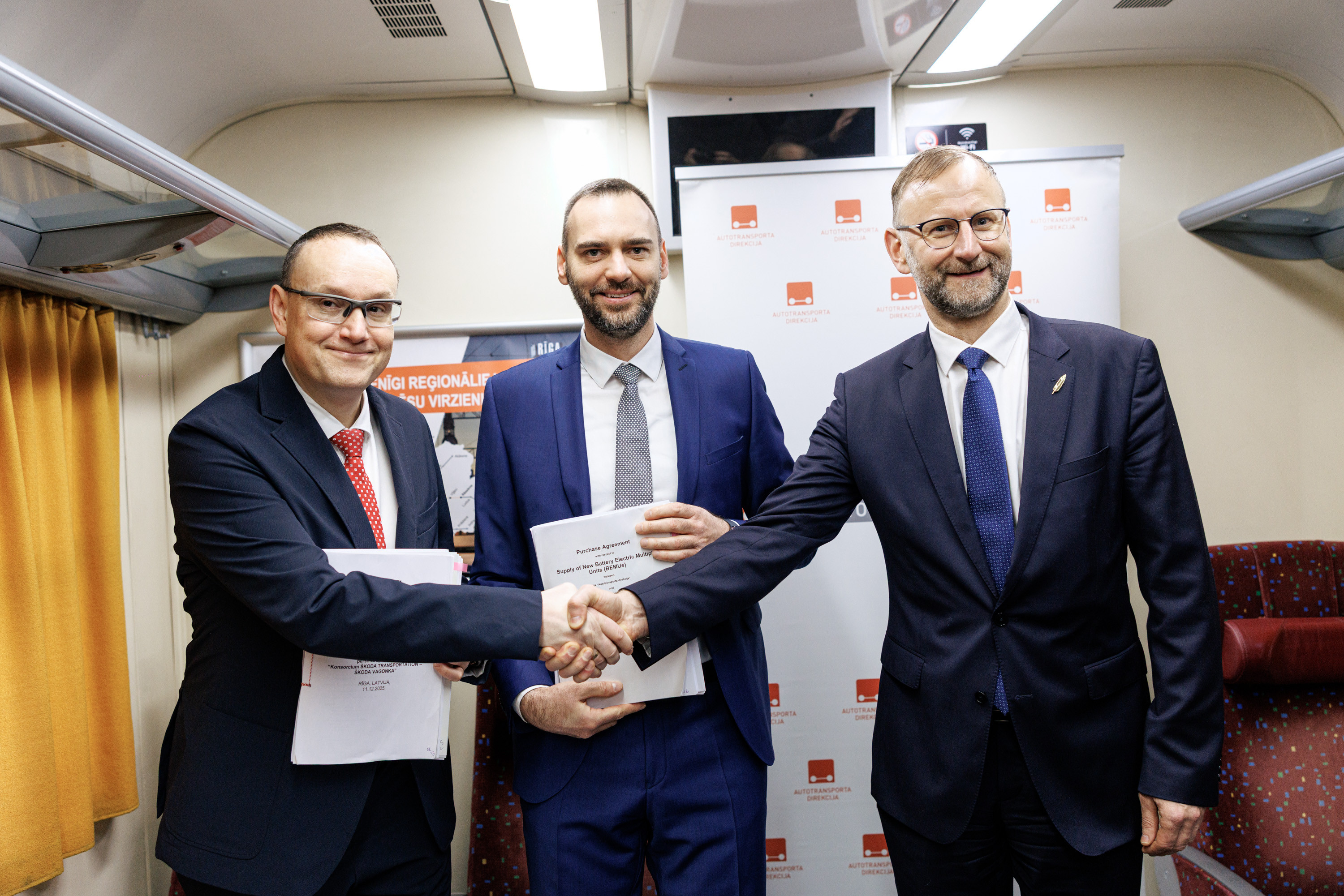
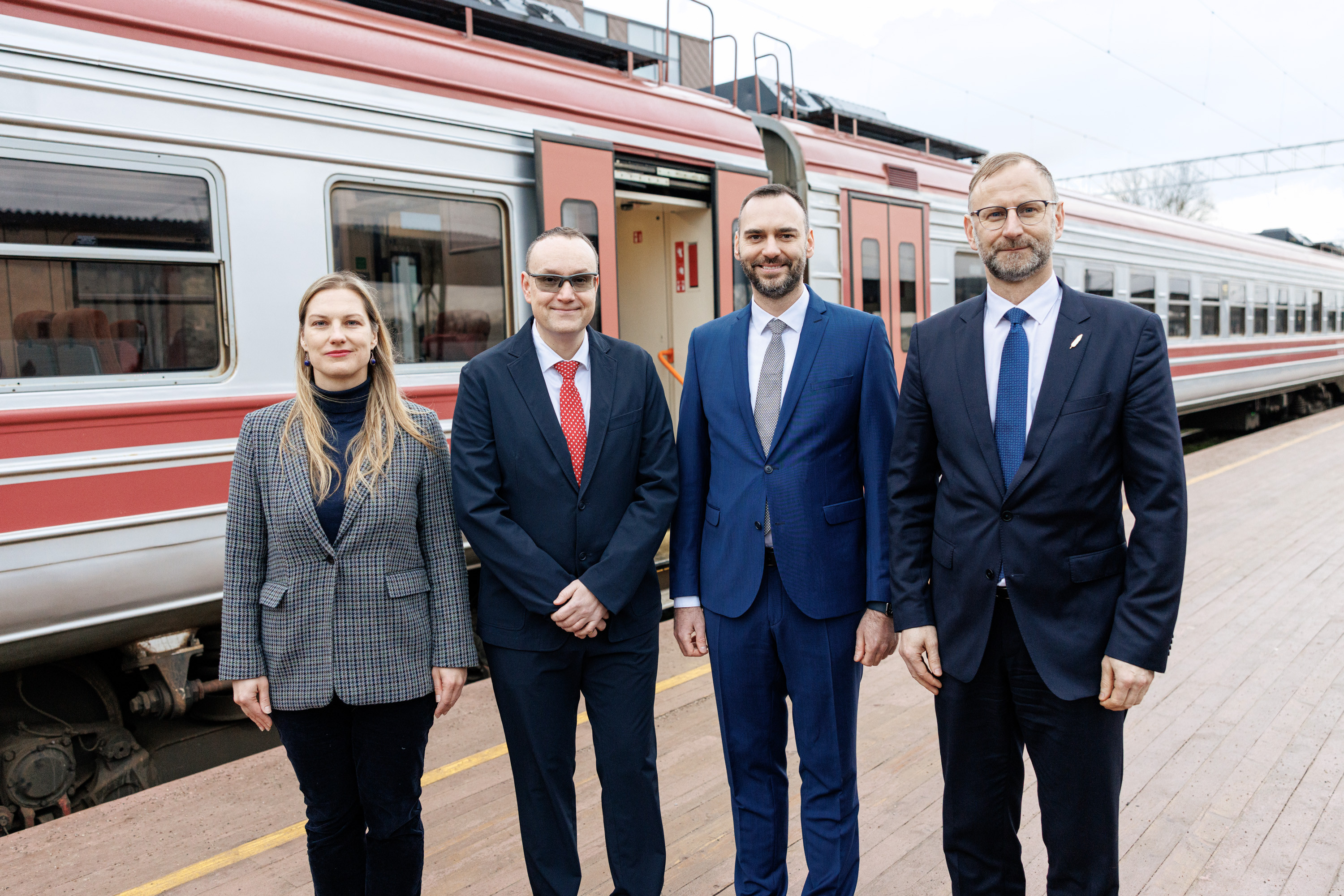
On 11 December, Road Transport Administration (ATD) and Škoda Group signed a contract for the purchase of nine battery-powered electric trains. The contract amount is EUR 89,409,387.00. The battery electric trains will be purchased using funding from the European Union’s Cohesion Fund and national financing. Delivery of the battery trains is planned by 2029.
Watch the video from the event!
Jānis Lapiņš, ATD Chairman of the Board: “Battery-powered electric trains are an important investment for Latvia to strengthen the role of railway as the backbone of public transport and to improve the quality and accessibility of passenger transport. During the journey, passengers will be able to enjoy all modern conveniences: climate control, reduced noise and vibration, modern restrooms, power sockets and USB-C charging ports. The new trains will be adapted for all passenger groups and will comply with the latest European accessibility requirements; they will feature a modern information system and spaces for passengers using wheelchairs. Conditions will also be improved for travellers with bicycles. While old diesel trains typically have a high floor and only 3 bicycle spaces, the new battery trains have low-floor zones with space for 8 bicycles — 4 placed vertically and 4 placed horizontally.”
In the coming years, not only passenger comfort and travel speed will be significantly improved, but also more environmentally friendly transport will be ensured — battery-powered electric trains are quieter and produce no pollutionwhich makes them friendlier both for passengers and for residents living near railway tracks.
The new battery electric trains will resemble the electric trains already used in passenger service. They will be two carriages long, with a low floor and 188 seats, including 24 first-class seats. The design speed of the new trains will be up to 160 km/h, while in battery mode — 120 km/h. It is expected that significantly better acceleration compared with existing diesel trains will allow full use of the available 120 km/h railway infrastructure and reduce travel time by potentially 15–25 minutes. As a result, traveling by train will become competitive with driving.
Battery electric multiple units (BEMU) are electric trains additionally equipped with batteries, allowing them to operate on non-electrified railway sections. They can be charged both while running on electrified lines and at dedicated charging stations. These new battery trains will primarily operate on the Daugavpils and Cēsis routes, where the necessary charging infrastructure will be built.
Currently, passenger services on non-electrified lines are provided by 23 diesel trains manufactured between 1980 and 1992. These nine new battery electric trains will replace part of the existing diesel fleet. The train procurement contract includes an option to purchase an additional seven trains if the necessary funding is secured. This would make it possible to replace most diesel trains and also serve additional destinations such as Rēzekne and Valmiera.